

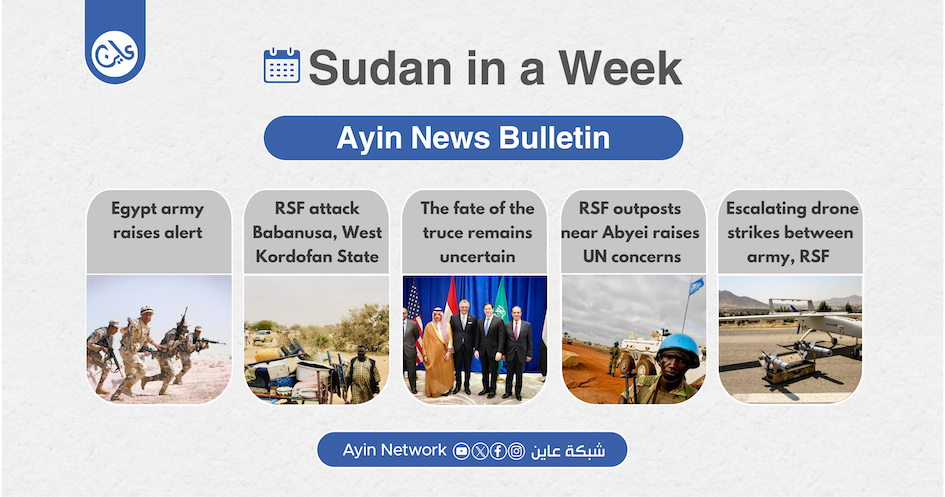
Sudan in a week: Ayin News Bulletin #8
11 November 2025
To keep our readers informed of the multitude of events taking place in Sudan amidst the ongoing, devastating war, we have developed a series of weekly news briefs, covering nine major topics of the week.
In this week’s edition:
- Egyptian army raises alert amid military escalation on Sudanese border
- Rapid Support Forces attack Babanusa and bombard Dilling
- The fate of humanitarian truce remains uncertain
- RSF military outposts in Abyei raise UN concerns
- RSF seeks to expand gold production in Darfur
- The army and RSF exchange escalating drone attacks
- Protests erupt in northern Sudan over mining pollution
- Chad reopens Adré border crossing with Sudan
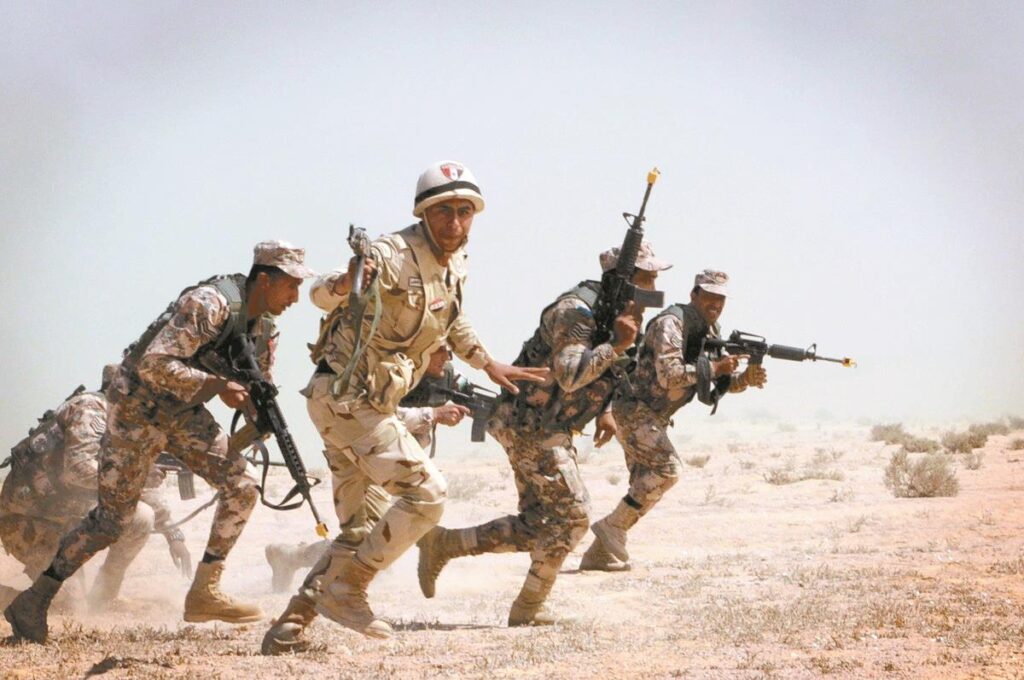 1. Egyptian army raises alert amid military escalation on Sudanese border
The Egyptian army has raised its readiness level in southern Egypt after an airstrike targeted a Rapid Support Forces (RSF) convoy near the border triangle between Sudan, Libya, and Egypt.
The RSF seized control of the gold-rich Triangle region in June 2025, raising concerns in Cairo over the group’s expanding influence along Egypt’s southwestern frontier. Egypt has not officially commented, but observers say the developments reflect growing tension over security and cross-border movements.
Coinciding with the escalation, Egyptian Foreign Minister Badr Abdel-Aty visited Port Sudan on Tuesday, reiterating that Egypt considers Sudan’s unity a “red line”. His trip followed diplomatic engagements with Gulf states to coordinate regional positions on Sudan.
A Sudanese government source told Ayin that the targeted convoy had arrived from Libya, carrying military equipment and foreign fighters, including Libyans, destined to support RSF operations against the Sudanese army.
Sources confirmed that most of those killed in the strike were foreign recruits brought by the RSF from Libya and western Africa.
Analysts say the RSF’s control of the border triangle has strategic importance. Researcher Mohamed Abbas told Ayin that since July, the RSF has used Libya’s Kufra region as a logistics hub for fuel, ammunition, and fighters—a move that prompted the Egyptian military’s heightened alert.
Abbas added that the RSF is also attempting to present itself to Europe as a partner in curbing irregular migration while maintaining its military and economic footholds across northern Darfur and the Triangle area.
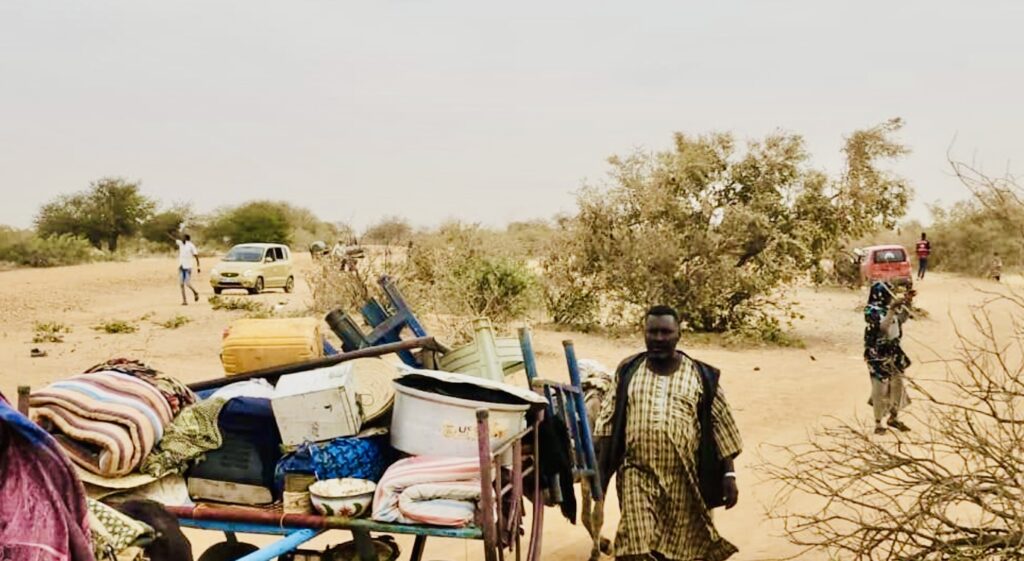 2. Rapid Support Forces attack Babanusa and bombard Dilling
The Rapid Support Forces (RSF) have intensified attacks in Kordofan, launching skirmishes near Babanusa in West Kordofan and heavy artillery strikes on Dilling in South Kordofan, leaving civilian casualties and worsening humanitarian conditions.
Local sources told Ayin that RSF fighters carried out limited ground assaults and drone strikes near the army’s 22nd Infantry Division base in Babanusa earlier this week, while continuing to amass forces for a larger offensive.
Led by Colonel Saleh Al-Futi, RSF units have been mobilising around Babnusa since seizing El Fasher in North Darfur, seeking to capture one of the army’s few remaining strongholds in West Kordofan.
Meanwhile, RSF and Sudan People’s Liberation Movement–North forces launched the heaviest bombardment yet on Dilling last Friday, firing more than 40 shells on residential neighbourhoods and hospitals, killing at least six people and injuring a dozen more.
The combined forces are tightening their siege at Dilling from three directions—west, north, and east, stationed just seven kilometres from the city centre.
Residents report deteriorating humanitarian conditions amid shortages of food and medicine. The RSF is also positioning around El Obeid, the capital of North Kordofan, where many families are fleeing in anticipation of renewed fighting.
 3. The fate of a humanitarian truce remains uncertain
Efforts to broker a humanitarian truce between Sudan’s warring factions remain stalled, despite the Rapid Support Forces (RSF) announcing their acceptance of the Quartet Mechanism’s proposal last week. The army has not formally declared its stance.
Both delegations remain in Washington for informal US-mediated consultations aimed at securing a three-month ceasefire.
The Sudanese Security and Defence Council met on Tuesday to discuss the truce but issued no decision. Defence Minister Hassan Daoud Kapron said the government had welcomed “sincere efforts” to ease civilian suffering and assigned a committee to outline Sudan’s position on aid access and security stabilisation.
The RSF stated that they approved the truce to enable humanitarian aid and safeguard civilians. It also called for immediate talks on ending hostilities and launching a political process to address Sudan’s long-term crises.
However, army leaders Abdel Fattah al-Burhan and Yasser al-Atta publicly rejected any truce with the RSF, insisting that fighting must continue.
US presidential adviser Massad Boulos said Washington remains optimistic about progress toward de-escalation and a peaceful settlement, though observers caution that trust between the parties remains minimal.
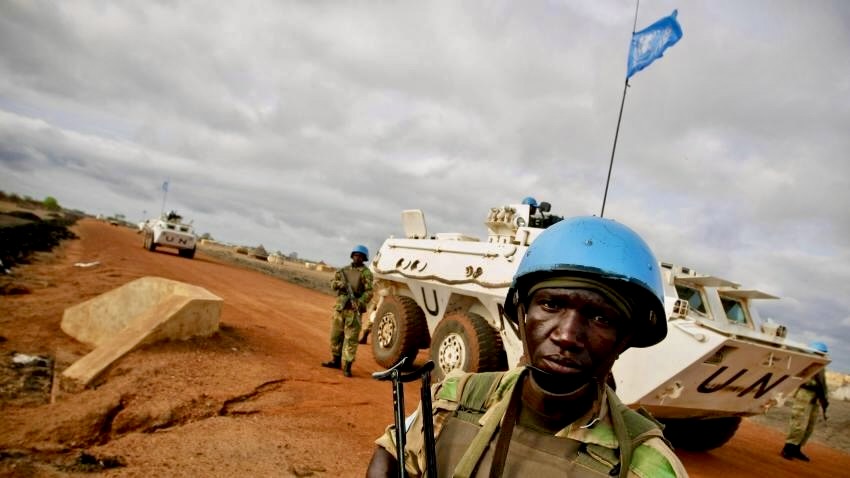 4. RSF military outposts in Abyei raise UN concerns
The establishment of Rapid Support Forces (RSF) checkpoints north of Abyei has alarmed the United Nations, which urged the withdrawal of all armed groups from the disputed border area between Sudan and South Sudan.
At a recent UN Security Council session, US representative Michael Waltz warned that Washington may reconsider support for the peacekeeping mission in Abyei if both countries fail to expedite administrative and security arrangements mandated under the 2005 peace accord.
Local officials confirmed to Ayin that RSF units have been deployed near Abyei alongside South Sudanese groups, escalating tensions as both sides face domestic political pressure to assert control over the region.
UN Assistant Secretary-General Martha Ama Akyaa Pobee told the Council that RSF and other militias have set up illegal checkpoints in northern Abyei, while South Sudanese forces remain stationed in the south.
Analysts fear the UN’s reduced funding for peacekeeping may increase the risk of clashes between Sudanese and South Sudanese forces.
Researcher Abdul Wahab Makki told Ayin that the RSF’s buildup near Abyei is part of a wider strategy to secure territory ahead of any ceasefire deal, with the group seeking to add the town to its military map.
 5. RSF seeks to expand gold production in Darfur
The Rapid Support Forces (RSF) plan to expand gold mining operations in Central Darfur, aiming to finance their “parallel government” and sustain their military campaign, sources told Ayin.
Between 2014 and 2019, the RSF reportedly earned over $3 billion from gold extracted in Jebel Amer, North Darfur. Tensions between Port Sudan authorities and Abu Dhabi in August 2025 halted gold exports to the UAE, which had surged during the war.
Political economist Mohamed Kamal told Ayin that Hemedti’s forces are working to consolidate control over Darfur’s resources, particularly gold, while attracting companies to operate under the RSF administration.
He warned that private military entities, including Russia’s Wagner Group, could exploit the situation to gain access to Darfur’s mines in exchange for military assistance.
Kamal added that if peace talks collapse, gold may become the main currency for foreign involvement in Sudan’s war economy, deepening external interference in the conflict.
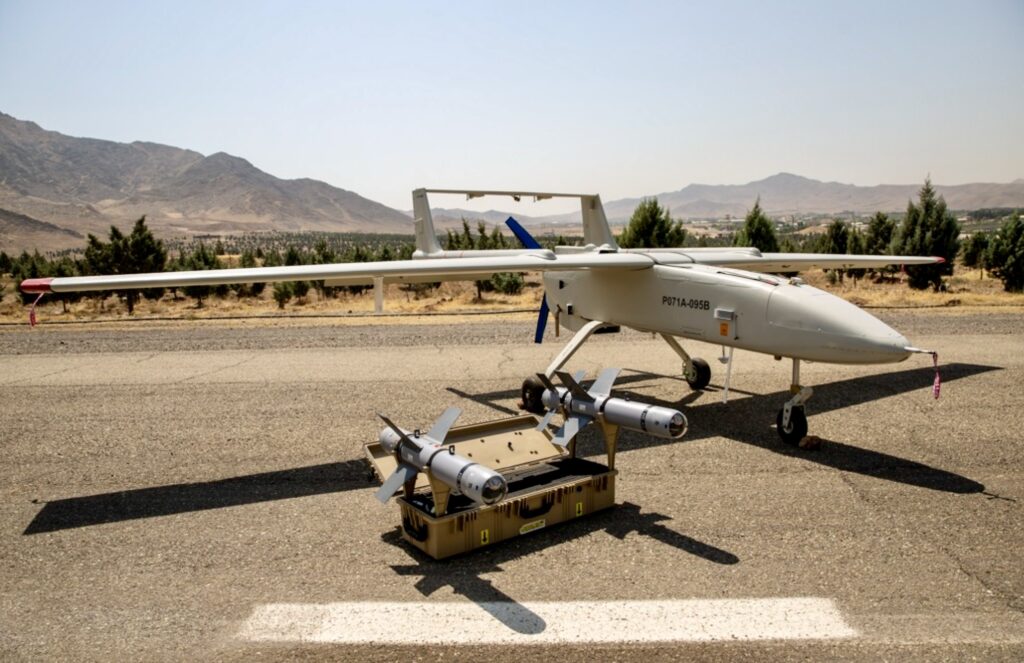 6. The army and RSF exchange escalating drone attacks
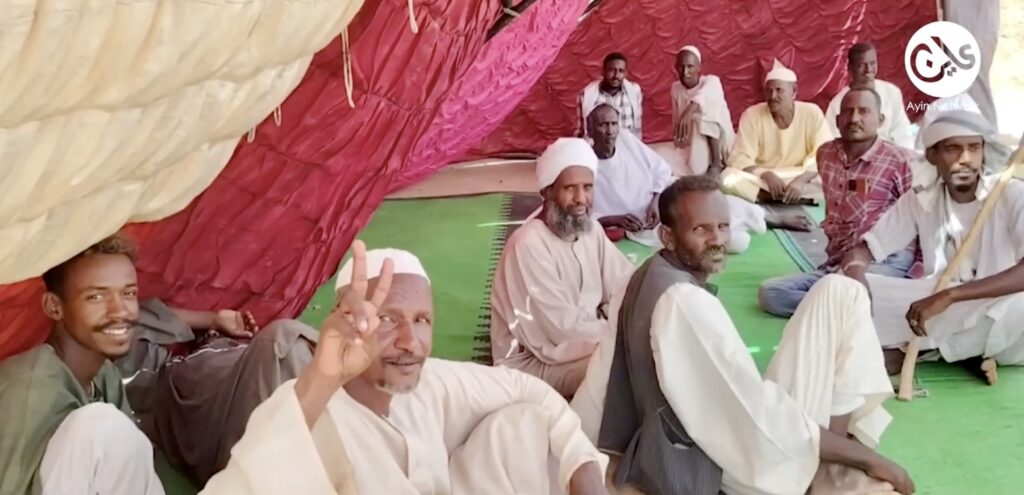 7. Protests erupt in northern Sudan over mining pollution
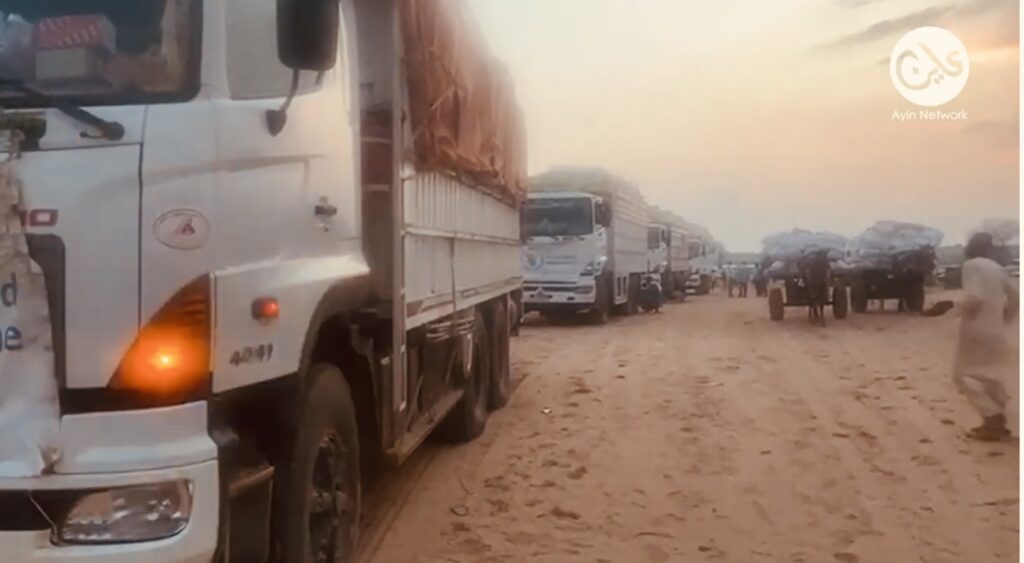 8. Chad reopens Adré border crossing with Sudan